
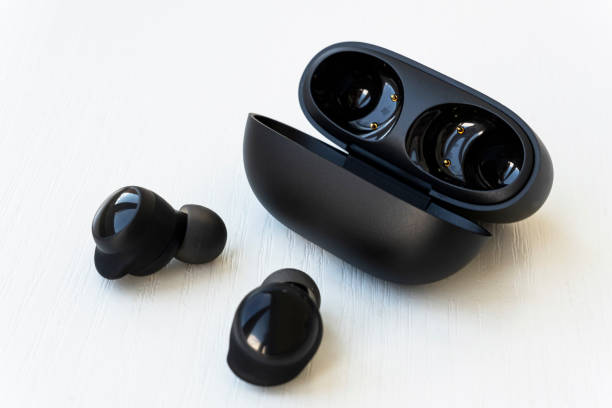
When buyers compare wireless noise-canceling earbuds, they often encounter three terms: ANC, ENC, and passive noise isolation. Although manufacturers sometimes use these terms interchangeably, they describe different technologies. Active Noise Cancellation (ANC) reduces environmental noise that reaches the listener’s ears. Environmental Noise Cancellation (ENC) primarily improves outgoing voice quality during calls. Passive isolation uses the physical design of earbuds to block external sound.
Confusing these technologies can lead to incorrect product expectations, customer complaints, and negative marketplace reviews. For distributors, private-label brands, and electronics retailers, understanding the differences is essential before selecting an OEM earbud model.
This guide explains how ANC, ENC, and passive isolation work, what their performance specifications actually mean, and which technical details buyers should verify before placing a bulk order.
1. Clearing Up the Confusion: Why ANC, ENC, and Passive Isolation Are Different
ANC, ENC, and passive noise isolation all help manage unwanted sound. However, they operate through different mechanisms and serve different purposes.
The most important distinction is the direction of the noise being controlled.
- ANC reduces environmental noise heard by the earbud wearer.
- ENC improves the voice signal transmitted from the wearer to the other person.
- Passive isolation physically reduces sound entering the ear canal.
A product may combine all three technologies, but one feature does not automatically prove that the others are available.
1.1 ANC: Reducing Noise for the Listener
Active Noise Cancellation uses microphones, signal processing, and speakers to generate an opposing sound signal.
The system analyzes incoming environmental noise and produces an anti-noise waveform. This waveform helps reduce the unwanted sound reaching the listener.
ANC is particularly useful for relatively continuous low-frequency noise, such as:
- Aircraft cabin noise.
- Bus and train engines.
- Air conditioning systems.
- Office ventilation.
- Road traffic rumble.
Its effectiveness varies by frequency, fit, microphone design, processing algorithms, and operating conditions.
1.2 ENC: Improving Voice Quality During Calls
Environmental Noise Cancellation usually focuses on the microphone input during voice calls.
The system identifies speech and attempts to reduce unwanted background sounds before transmitting the voice signal.
For example, a person may use ENC earbuds while walking along a busy street. The technology helps the person on the other end hear the speaker more clearly.
ENC does not necessarily reduce the traffic noise heard by the earbud wearer.
This distinction is especially important when suppliers advertise ENC as full active noise cancellation.
1.3 Passive Noise Isolation: Blocking Sound Through Physical Design
Passive noise isolation does not require electronic noise-cancellation processing.
Instead, the earbud structure creates a physical barrier between the ear canal and surrounding sounds.
Common design elements include:
- Silicone ear tips.
- Memory foam ear tips.
- In-ear nozzle geometry.
- Earbud housing shape.
- Contact pressure and sealing consistency.
A suitable seal can reduce many external sounds, particularly higher-frequency noise.
However, isolation depends heavily on ear anatomy and correct ear-tip selection.
1.4 ANC vs. ENC vs. Passive Isolation
| Feature | ANC | ENC | Passive Noise Isolation |
|---|---|---|---|
| Full name | Active Noise Cancellation | Environmental Noise Cancellation | Physical sound isolation |
| Main purpose | Reduce noise heard by the wearer | Improve outgoing call voice | Physically block external sound |
| Main signal path | Environmental sound to the listener | Microphone input to transmitted voice | External sound entering the ear |
| Main technology | Microphones, DSP, anti-noise signals | Microphones and voice-processing algorithms | Ear tips and housing design |
| Electronic processing | Required | Usually required | Not required |
| Best-known application | Travel and noisy environments | Voice calls and online meetings | Everyday listening |
| Works without a tight ear seal | Performance may be affected | Call processing may still operate | Isolation is usually reduced |
For product development, these functions should be specified and tested separately.
A pair of earbuds with ENC should not be marketed as ANC unless it also includes genuine active noise-cancellation functionality.
2. ANC (Active Noise Cancellation): Mechanism, Frequency Range, and Depth (dB)
ANC is one of the most recognizable technologies in premium wireless earbuds.
It helps users listen to music, podcasts, and other audio content in environments with continuous background noise.
However, ANC performance depends on more than a single noise-reduction number.
2.1 How Active Noise Cancellation Works
An ANC system typically uses microphones to capture environmental noise.
A digital signal processor analyzes the incoming sound and generates an opposing acoustic signal through the earbud speaker.
When the original noise and the generated anti-noise interact, they can partially cancel each other.
This process relies on the principles of destructive interference.
The basic ANC signal path includes:
- Microphones capture surrounding noise.
- The signal processor analyzes the noise.
- The algorithm calculates an appropriate anti-noise signal.
- The speaker produces the anti-noise waveform.
- The combined sound reaching the ear is reduced.
The system must operate with low latency and appropriate signal control. Otherwise, cancellation performance may decrease or unwanted artifacts may occur.
2.2 Feedforward, Feedback, and Hybrid ANC
Manufacturers use different microphone arrangements to implement ANC.
Feedforward ANC
A feedforward system places a microphone on the outside of the earbud.
It detects external noise before that sound reaches the ear canal. The processor then generates a corresponding anti-noise signal.
Potential advantages include:
- Early detection of environmental noise.
- Effective control in selected frequency ranges.
- Flexible tuning for different environments.
However, external microphone placement can make the system sensitive to wind and microphone interference.
Feedback ANC
A feedback system uses an internal microphone positioned inside the earbud.
It monitors the sound near the listener’s ear and helps the processor adjust the anti-noise signal.
Potential advantages include:
- Monitoring of residual sound.
- Correction based on the actual ear-canal acoustic response.
- Better control of certain low-frequency noise conditions.
Its performance depends on microphone quality, acoustic design, and system stability.
Hybrid ANC
Hybrid ANC combines external and internal microphones.
This approach allows the processor to analyze environmental noise and monitor the sound inside the earbud.
It can provide broader control across different noise conditions, although actual performance depends on the complete hardware and software design.
2.3 Understanding ANC Frequency Performance
ANC generally performs well against relatively continuous low-frequency sounds.
Examples include:
- Aircraft engine rumble.
- Train movement.
- Air conditioning.
- Vehicle engine noise.
- Low-frequency machinery.
Sudden sounds and many high-frequency sounds are more difficult to cancel electronically.
For example, a nearby conversation, keyboard click, or sharp impact may remain audible.
This is why passive isolation remains important.
A well-designed earbud combines suitable physical sealing with effective ANC processing to manage a wider range of environmental noise.
2.4 What Does -30 dB to -45 dB ANC Mean?
Some wireless ANC earbuds advertise noise reduction values around -30 dB to -45 dB.
These figures may describe measured attenuation under specific testing conditions. However, they should not be interpreted as guaranteed performance across all frequencies and environments.
Buyers should ask:
- At which frequencies was the reduction measured?
- Was the test conducted on an artificial ear or another measurement system?
- Was the measurement made with a standard ear tip?
- Does the result represent a peak value or a frequency-weighted average?
- Was the test conducted with ANC enabled and other settings controlled?
A single maximum dB figure does not describe the complete ANC experience.
A frequency-response graph or attenuation curve provides more useful information about how the product performs across different noise frequencies.
2.5 ANC Performance Factors for OEM Buyers
When evaluating an ANC earbud supplier, review the following components.
| Component | Function | Buyer Consideration |
|---|---|---|
| External microphones | Capture environmental noise | Sensitivity and wind-noise handling |
| Internal microphones | Monitor residual sound in feedback or hybrid systems | Acoustic response and stability |
| DSP or audio chipset | Processes noise signals | Processing capability and latency |
| Speaker driver | Produces audio and anti-noise signals | Frequency response and distortion |
| Ear-tip structure | Creates acoustic sealing | Fit consistency and comfort |
| ANC algorithm | Controls cancellation behavior | Performance across different environments |
ANC performance is a system-level result. A high-specification chipset alone cannot guarantee effective noise cancellation.
3. ENC (Environmental Noise Cancellation): Multi-Mic Array for Clear Calls
ENC is designed to improve communication quality in noisy environments.
For wireless earbuds, it usually processes microphone signals to distinguish the speaker’s voice from surrounding sounds.
This technology is especially relevant to products marketed for office calls, remote meetings, commuting, and everyday communication.
3.1 How ENC Processes Background Noise
During a phone call, the earbud microphone captures both the user’s voice and surrounding noise.
The ENC algorithm processes the microphone signals to emphasize speech and reduce unwanted background sounds.
Depending on the design, the system may use:
- Microphone signal filtering.
- Noise estimation.
- Directional processing.
- Beamforming.
- Adaptive noise suppression.
- Voice activity detection.
The exact processing method depends on the chipset and software implementation.
The objective is to improve the clarity of the transmitted voice, not to create a quieter listening environment for the wearer.
3.2 Dual-Microphone and Triple-Microphone ENC Designs
Microphone quantity is an important hardware consideration, but more microphones do not automatically guarantee better call quality.
Dual-microphone ENC
A dual-microphone design commonly uses two microphones to collect different acoustic signals.
The system can compare these signals and apply noise-reduction processing.
Potential benefits include:
- More information for voice and noise separation.
- Support for directional processing.
- A relatively compact hardware configuration.
- Practical cost and size balance.
Triple-microphone ENC
A triple-microphone design provides additional acoustic input channels.
Depending on microphone placement and algorithm design, this can support more advanced signal processing.
Potential benefits may include:
- Additional information for noise estimation.
- More flexible beamforming configurations.
- Better adaptation to selected noisy environments.
- Additional design options for voice pickup.
However, microphone arrangement, acoustic port design, signal synchronization, and algorithm tuning remain critical.
A poorly designed three-microphone system may perform worse than a well-tuned dual-microphone system.
3.3 Beamforming: Focusing on the Speaker’s Voice
Beamforming is a signal-processing technique that uses multiple microphones to emphasize sound arriving from selected directions.
In wireless earbuds, the algorithm can use differences in microphone signals to improve voice pickup.
For example, a microphone arrangement may prioritize the user’s mouth direction while reducing some sounds arriving from other directions.
However, real-world performance depends on:
- Microphone spacing.
- Microphone sensitivity matching.
- Earbud orientation.
- User speaking position.
- Background noise characteristics.
- Signal-processing algorithms.
Beamforming is not a universal solution for every noise environment. It should be validated through practical call tests.
3.4 Why ENC Matters for Business and Daily Communication
Clear calls are important for several earbud applications.
Remote work
Users need clear voice transmission during video meetings and online collaboration.
Commuting
ENC can help reduce certain background sounds during calls in public transportation environments.
Outdoor communication
Wind and traffic noise can interfere with voice pickup. Effective microphone placement and noise processing can help improve transmitted speech.
Business travel
Users may need to make calls in airports, hotels, and other shared environments.
For these applications, buyers should assess voice clarity under realistic conditions rather than relying only on microphone count.
3.5 How to Evaluate ENC Performance
A useful ENC evaluation should include several different background environments.
| Test Environment | Main Challenge | What to Evaluate |
|---|---|---|
| Quiet office | Natural voice reproduction | Voice clarity and tonal balance |
| Busy street | Traffic and pedestrian noise | Background noise suppression |
| Public transportation | Continuous engine and cabin noise | Speech intelligibility |
| Outdoor windy area | Wind hitting microphone ports | Wind-noise handling |
| Shared workspace | Multiple nearby voices | Voice separation and background control |
Ask suppliers for recorded call samples or conduct direct listening tests.
Compare the transmitted voice with the original recording. Pay attention to voice naturalness, missing syllables, distortion, and residual noise.
4. Passive Noise Isolation: Mechanical Ergonomics and Seal Precision
Passive noise isolation is often overlooked when buyers compare wireless noise-canceling earbuds.
However, the physical fit of an earbud plays a major role in perceived noise reduction.
Even advanced ANC processing may deliver disappointing results if the earbud cannot create a suitable acoustic seal.
4.1 How Physical Earbud Design Blocks External Noise
In-ear earbuds use ear tips to create a partial seal inside the ear canal.
This barrier reduces the amount of external sound entering the ear.
The quality of isolation depends on several factors:
- Ear-tip material.
- Ear-tip size.
- Nozzle diameter.
- Nozzle angle.
- Earbud housing shape.
- Contact pressure.
- Fit stability during movement.
A suitable seal can reduce many higher-frequency sounds and some lower-frequency sounds.
However, passive isolation is not identical to electronic noise cancellation. It does not generate an opposing sound signal.
4.2 Silicone vs. Memory Foam Ear Tips
Ear-tip materials influence comfort, fit, durability, and isolation.
| Feature | Silicone Ear Tips | Memory Foam Ear Tips |
|---|---|---|
| Material | Flexible silicone | Compressible foam |
| Fit | Depends on size and shape | Expands to conform to the ear canal |
| Comfort | Often suitable for extended use | Can provide a customized-feeling fit |
| Noise isolation | Depends on seal quality | Often provides strong passive sealing |
| Cleaning | Generally easier | Requires more careful maintenance |
| Durability | Depends on silicone quality | Foam may wear faster with repeated use |
| OEM customization | Multiple sizes and shapes | Different foam densities and designs |
Neither material is universally better.
Silicone tips are practical for many mass-market products because they are easy to clean and maintain.
Memory foam may suit users who prioritize a closer physical seal, but fit preference and replacement costs should be considered.
4.3 Why Ear-Tip Size and Seal Precision Matter
An ear tip that is too small may leave gaps around the ear canal.
This can allow external sound to enter and reduce both passive isolation and ANC effectiveness.
An ear tip that is too large may create excessive pressure and discomfort.
Therefore, manufacturers should consider multiple ear-tip sizes and test their fit across different users.
A practical product-development process includes:
- Evaluating different ear-tip sizes.
- Testing fit stability during movement.
- Measuring acoustic sealing performance.
- Checking long-term wearing comfort.
- Testing ANC performance with different fit conditions.
- Reviewing user feedback from different ear shapes.
For OEM buyers, ear-tip design is not merely an accessory decision. It affects the overall acoustic performance and customer experience.
4.4 How Passive Isolation and ANC Work Together
Passive isolation and ANC complement each other.
The ear tip physically reduces the amount of external sound entering the ear canal. ANC then processes the remaining environmental noise and generates an opposing acoustic signal.
This combination can improve the overall listening experience.
For example:
- Passive isolation helps reduce many higher-frequency sounds.
- ANC can target selected low-frequency environmental noise.
- The speaker reproduces music and other audio content.
- The combined acoustic design determines the final listening experience.
This is why a well-sealed earbud with properly tuned ANC can perform better than a product that relies heavily on electronic processing alone.
5. How to Choose the Right Noise-Canceling Technology for Your Earbud Product
For distributors and private-label brands, the right technology depends on the target customer and product positioning.
Not every market needs premium hybrid ANC. Some customers prioritize call clarity, while others care more about travel comfort or affordable everyday listening.
5.1 Match Technology to the Target Market
| Target Market | Recommended Technology Focus | Main Product Priority |
|---|---|---|
| Entry-level everyday earbuds | Passive isolation | Comfort and value |
| Office and business earbuds | ENC and passive isolation | Clear calls |
| Travel earbuds | ANC and passive isolation | Reduced environmental noise |
| Premium wireless earbuds | Hybrid ANC, ENC, and passive isolation | Comprehensive listening and call experience |
| Sports earbuds | Secure fit, passive isolation, and call processing | Stability and communication |
| Budget Bluetooth earbuds | Fit optimization and basic microphone processing | Cost-effective performance |
These are product-positioning guidelines rather than fixed technical rules. The final configuration should reflect customer expectations and target pricing.
5.2 Questions to Ask an OEM Earbud Manufacturer
Before selecting a wireless noise-canceling earbud model, buyers should verify:
ANC specifications
- Does the product include genuine active noise cancellation?
- Is the design feedforward, feedback, or hybrid?
- What frequency range has been tested?
- Is the advertised noise reduction value supported by measurement data?
- Does the ANC function support different operating modes?
ENC specifications
- How many microphones are used?
- Where are the microphones positioned?
- Does the product use beamforming or other voice-processing algorithms?
- Are call samples available from noisy environments?
Passive isolation
- Which ear-tip materials are available?
- Are multiple sizes included?
- Has fit and sealing performance been evaluated?
- Can the ear-tip design be customized?
OEM and product customization
- Can the housing and color be customized?
- Are logo printing and packaging customization available?
- Can the manufacturer support different microphone configurations?
- Are chipset, battery, and acoustic options available?
- Can the supplier provide samples for evaluation?
5.3 Avoiding Misleading ANC and ENC Product Claims
Incorrect technical descriptions can damage a brand’s reputation.
For example, a supplier may describe earbuds with ENC microphones as ANC earbuds. Customers then expect environmental noise reduction during music playback.
When the product only improves call quality, the difference becomes obvious after purchase.
To reduce this risk, buyers should:
- Confirm the actual hardware and software configuration.
- Request functional demonstrations.
- Review ANC attenuation data when ANC is advertised.
- Test call recordings when ENC is advertised.
- Check the product manual and packaging descriptions.
- Use separate specifications for listening noise cancellation and call noise reduction.
Accurate product descriptions help brands set realistic expectations and reduce avoidable customer complaints.
Frequently Asked Questions About Wireless Noise-Canceling Earbuds
1. What is the difference between ANC and ENC in wireless earbuds?
ANC reduces environmental noise heard by the earbud wearer through active sound cancellation. ENC processes microphone signals to improve the voice transmitted during calls.
They serve different purposes and are not interchangeable.
2. Does ENC mean that earbuds can block outside noise?
No. ENC primarily improves outgoing voice clarity during calls.
It does not necessarily reduce the environmental noise that the wearer hears while listening to music.
3. Is ANC better than ENC?
Neither technology is universally better because they solve different problems.
ANC is useful for reducing environmental noise during listening. ENC is useful for clearer voice transmission during calls.
The right choice depends on the intended product application.
4. What does -40 dB ANC mean?
A -40 dB figure usually represents a noise attenuation result under specific measurement conditions.
It does not mean the earbuds remove all surrounding noise by 40 dB at every frequency. Buyers should request frequency-response measurements and test conditions.
5. Do more microphones always provide better ENC performance?
No. More microphones can provide additional acoustic information, but microphone placement, sensitivity matching, signal processing, and algorithm tuning are equally important.
A well-designed dual-microphone system can outperform a poorly configured triple-microphone system.
6. Can passive noise isolation work without ANC?
Yes. Ear tips and housing geometry can physically reduce external sound without electronic processing.
However, passive isolation cannot generate anti-noise signals like ANC.
7. Can wireless earbuds support both ANC and ENC?
Yes. Many advanced earbud designs combine ANC for listening and ENC for calls.
They may also include passive noise isolation through their ear-tip and housing design.
8. Which noise-canceling technology is best for wholesale earbud buyers?
The best configuration depends on the target market.
Travel-focused products often benefit from ANC, while business communication products may prioritize ENC. Premium models may combine ANC, ENC, and effective passive isolation.
Conclusion: Understand the Technology Before Choosing Wireless Noise-Canceling Earbuds
ANC, ENC, and passive noise isolation are three different technologies. Understanding their functions helps buyers select products that match real customer expectations.
ANC reduces environmental noise heard by the wearer. ENC improves the clarity of transmitted voice during calls. Passive isolation uses earbud materials and fit to physically limit external sound.
For B2B buyers, the most important step is to verify actual product performance rather than relying on marketing terminology. Check the microphone configuration, ANC measurement conditions, ear-tip design, and real-world audio samples before confirming an OEM order.
A well-designed earbud should combine appropriate hardware, acoustic engineering, and accurate product positioning. This approach helps brands deliver a more consistent user experience and build long-term customer trust.
AiL provides customized Bluetooth earbud solutions for different market requirements. Contact our team to discuss ANC and ENC configurations, microphone options, acoustic design, branding, and OEM customization.