
For outdoor enthusiasts and marathon runners, the sound of the wind is the ultimate disruptor. When you are sprinting against a headwind or cycling at high speeds, the air rushing past your ears creates turbulent “vortex noise.” This acoustic interference can drown out your favorite playlist and turn an important business call into a muffled mess. Traditional earbuds often struggle in these conditions, either by failing to block the roar or by sacrificing audio transparency for safety.
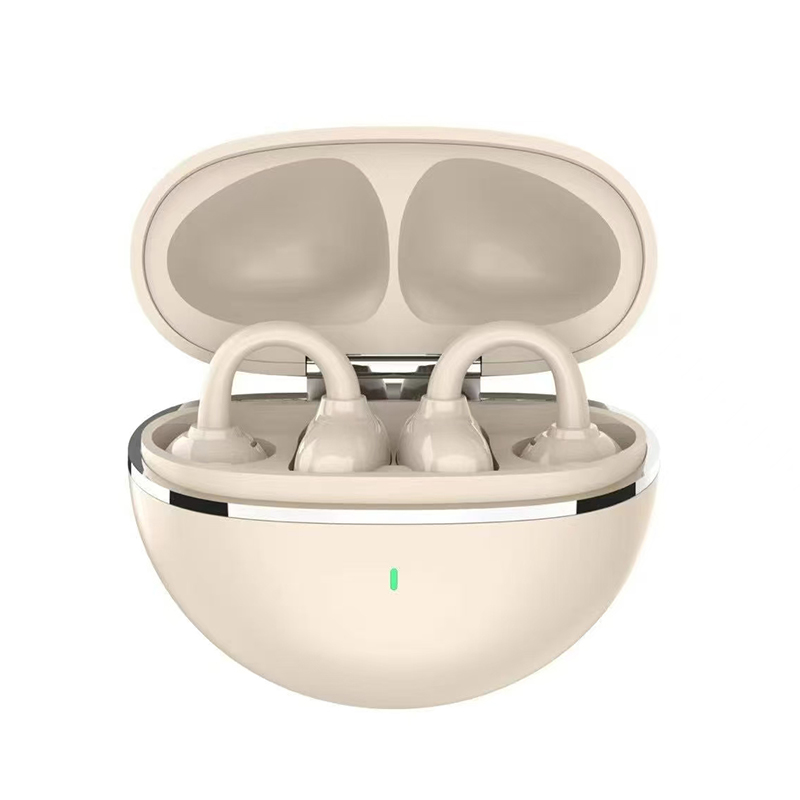
However, the latest generation of clip-on Bluetooth earphones is redefining the outdoor audio experience. By combining “Hybrid Dual-Feed Active Noise Cancellation (ANC)” with “Aerodynamic Physical Shielding,” these devices act as a filter for the elements. This article dives deep into the engineering behind how these earphones dynamically neutralize wind interference while keeping you immersed in every high-fidelity note.
1. The Physics of the “Wind Wall”: Why Outdoor Audio Fails
To solve the problem of wind noise, we must first understand its nature. Unlike the steady hum of an airplane engine, wind noise is “stochastic”—it is chaotic, unpredictable, and changes frequency based on your running speed and the angle of your head.
The Turbulence Problem
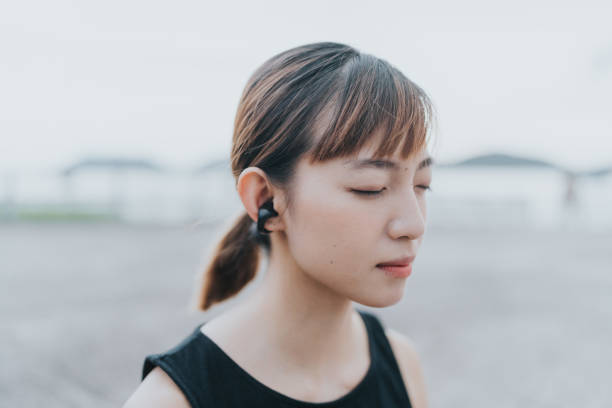
When wind hits the housing of an earphone, it creates micro-eddies. These eddies strike the microphone diaphragms directly, creating a “buffeting” sound that software often confuses with the user’s voice or the music’s bass frequencies. For clip-on Bluetooth earphones, which sit on the outer ear to maintain situational awareness, this exposure to airflow is even more direct. To overcome this, engineers must employ a two-pronged strategy: physical diversion and digital cancellation.
2. Hybrid Dual-Feed ANC: The Digital Shield
The most effective way to eliminate complex noise is through Hybrid Dual-Feed ANC. This system utilizes a sophisticated microphone array to create a “silent zone” around the ear canal.
Feed-forward + Feed-back Logic
- The Feed-forward Mic: Located on the exterior of the earphone, this microphone “listens” to the approaching wind. It captures the high-frequency turbulence before it reaches your ear.
- The Feed-back Mic: Positioned closer to the ear opening, this microphone monitors what you actually hear. It detects any residual noise that “leaked” past the outer shield.
- The Counter-Wave: The internal DSP (Digital Signal Processor) analyzes these two signals in real-time and generates an inverted “anti-noise” wave. By blending these two feeds, the earphones can cancel out a broader spectrum of noise compared to standard single-mic systems.
3. Aerodynamic Physical Design: The “Windbreaker” for Your Ears
Even the best software can be overwhelmed if the microphone is “choked” by direct wind. This is why the physical industrial design of clip-on Bluetooth earphones is critical.
Precision Acoustic Wind Hoods
Modern sports earphones feature a “sunken” microphone design. Instead of placing the mic on the surface, engineers tuck it into a specialized acoustic chamber protected by a stainless-steel micro-mesh or a high-density “wind hood.”
- Laminar Flow Design: The outer casing uses aerodynamic curves similar to an aircraft wing. This shape encourages “laminar flow,” where the air glides smoothly over the earphone rather than crashing into the microphone port.
- Pressure Equalization: Small vents help equalize internal pressure, preventing that “clogged ear” feeling while ensuring that the wind’s kinetic energy is dissipated before it hits the sensitive sensors.
4. Intelligent Wind Detection Algorithms: Smart Adaptation
Wind is not constant. A runner might turn a corner and suddenly face a 20mph gust. A static noise-cancelling profile cannot handle this variability.
The AI Wind-Sense Engine
High-performance clip-on Bluetooth earphones utilize an “Intelligent Wind Detection” algorithm. The system constantly monitors the “noise floor” of the feed-forward microphone.
- Auto-Throttling: When the algorithm detects a sudden spike in wind turbulence, it automatically adjusts the ANC depth and shifts the ENC (Environmental Noise Cancellation) focus to the human vocal range.
- Anti-Distortion: During high winds, traditional ANC can sometimes create “hissing” artifacts. Smart algorithms suppress these artifacts, ensuring that the music’s mid-range and treble stay crisp and untainted.
5. Crystal Clear Calls: ENC and Beamforming Technology
For many users, the primary pain point is not hearing the music but being heard during a call. When you are running, your voice is often competing with your own heavy breathing and the surrounding traffic.
Multi-Mic Beamforming
By using a dual or triple-mic array, the earphones create a “Virtual Beam” aimed at your mouth.
- Voice Isolation: The primary mic picks up your voice.
- Noise Subtraction: The secondary mics pick up the wind and ambient noise.
- Digital Extraction: The DSP subtracts the noise signal from the voice signal. As a result, the person on the other end of the line hears your voice with startling clarity, even if you are jogging through a windy park or along a busy coastline.
6. Safety Meets Immersion: The “Clip-on” Advantage
One of the unique benefits of the clip-on Bluetooth earphones form factor is the balance between audio immersion and environmental safety.
Open-Ear Architecture
Unlike in-ear buds that seal the ear canal (which can cause a “thumping” sound with every footstep), clip-on models allow for natural air circulation.
- Reduced Occlusion Effect: You don’t hear your own heartbeat or internal bone conduction noises while running.
- Environmental Awareness: While the Hybrid ANC terminators the annoying wind noise, the open-ear design still allows you to hear high-frequency “safety sounds” like car horns or cycling bells. This “smart transparency” is essential for urban athletes.
7. Conclusion: Reclaiming the Soundtrack of Your Workout
The outdoors should be your playground, not an acoustic battlefield. The integration of Hybrid Dual-Feed ANC, aerodynamic physical shielding, and AI-driven algorithms has finally ended the “war on wind.”
By choosing clip-on Bluetooth earphones designed with these technologies, you no longer have to choose between a powerful bassline and the sound of the wind. You can sprint, climb, and cycle with the confidence that your music will remain pure and your calls will remain professional. The wind may be blowing, but with the right technology, you will only hear the notes that matter.