

Modern smartphone users carry an increasingly complex array of personal electronics every single day. Managing wireless earbuds, tablets, smartwatches, and primary smartphones creates a continuous battle for battery power. For this reason, buying a reliable portable charger represents an essential step in maintaining your daily digital workflow.
However, many shoppers face a frustrating design choice when selecting new hardware. Should you opt for a traditional power bank with standard open connection ports? Or should you invest in a modern dual built-in cable power bank system?
While raw ports offer universal connection options, they require you to carry loose, tangled charging cords everywhere you go. Conversely, an integrated cable configuration provides instant, clutter-free power directly from your pocket. This comparative guide breaks down user ecosystem dynamics to help you choose the ultimate charging setup for your specific hardware array.
1. Matching Your Device Ecosystem to the Right Integrated Cable Profile
Most premium integrated power banks do not pack every single connector type into one single chassis. Instead, manufacturers optimize hardware by letting you choose between tailored Type-C or Lightning built-in configurations. Review this detailed hardware matrix to match your specific setup with the perfect charger style:
| Target User Profile | Primary Everyday Carry Hardware | Recommended Built-In Cable Configuration | Ideal Emergency Backup Strategy |
| Dedicated iPhone Legacy User | iPad Pro models, MacBook Air; newer iPhone series. | Premium Lightning Integrated Line | Pack a compact USB-C adapter tip inside your travel bag. |
| Modern Android / Apple User | iPhone 14 or older series; standard Lightning AirPods. | Universal Type-C Integrated Line | Store a secondary, ultra-short Lightning cord for older gear. |
| Complete Apple Ecosystem User | iPad Pro models, MacBook Air, and newer iPhone series. | High-Wattage Type-C Configuration | Carry a compact adapter block for legacy accessory ports. |
| Cross-Platform Mixed User | Mix of older iOS hardware and modern Android tablets. | Match your highest-use primary device | Use the open secondary port for alternative cables. |
2. The Critical Decision Logic: Choosing Your Tailored Connection Option
Selecting a “one-or-the-other” built-in cable configuration requires checking your actual daily hardware usage habits. Do not choose a style at random. Instead, look closely at your personal patterns by walking through these three simple practical questions:
Check Your Primary Gear ──> Identify Your Most Forgotten Cord ──> Select Your Tailored Cable Configuration
First, look at the bottom port of the single device you pull out most frequently during your morning commute. If you are using a modern device, a Type-C layout will cover almost all of your fast-charging needs. Second, think about the specific cord you most frequently forget to pack when rushing out the door. Your integrated cable functions as a reliable backup system, so let it mirror the cord you lose most often. Finally, check your existing travel gear to ensure your new power bank can easily recharge your accessories without requiring a mess of extra adapters.
3. The Integrated Cable as Your Ultimate Backup Defense Line
Loose charging cords are incredibly easy to forget on your kitchen counter, and they wear out rapidly from continuous bending inside backpacks.
                    Why Integrated Cable Lines Save Your Day:
   ┌──────────────────────────────────────────────────────────────────┐
   │ Zero Cord Clutter: Eliminates long, tangled wires in your pocket.│
   ├──────────────────────────────────────────────────────────────────┤
   │ True Instant Deployment: Simply pull out the line and plug it in.│
   ├──────────────────────────────────────────────────────────────────┤
   │ Zero Cable Deficits: You will never find yourself without a cord.│
   └──────────────────────────────────────────────────────────────────┘
An integrated cord layout ensures you are never stranded with a dead battery block and no way to connect your phone. It serves as your permanent, damage-resistant backup line during long flights and unexpected commutes. Because the cable wraps cleanly back into the main structural body of the housing, the sensitive wire connections stay completely protected from snapping or scratching against loose keys.
4. Balancing Battery Storage Capacity Against Your Travel Schedule
Selecting the ideal battery storage capacity depends heavily on how long you plan to stay away from a traditional AC wall outlet.
 Short Daily Commutes [5,000mAh - 10,000mAh] ──> Ultra-Light Weight Profile / Fits Inside Pockets
 Extended Multi-Day Trips [20,000mAh - 25,000mAh] ──> Maximum Energy Storage / Safe for Airline Travel
For standard office routines or quick evening outings, a compact 10,000mAh battery brick offers the perfect balance. It provides plenty of juice to refresh a dead smartphone twice while keeping the chassis slim enough to fit inside a jacket pocket.
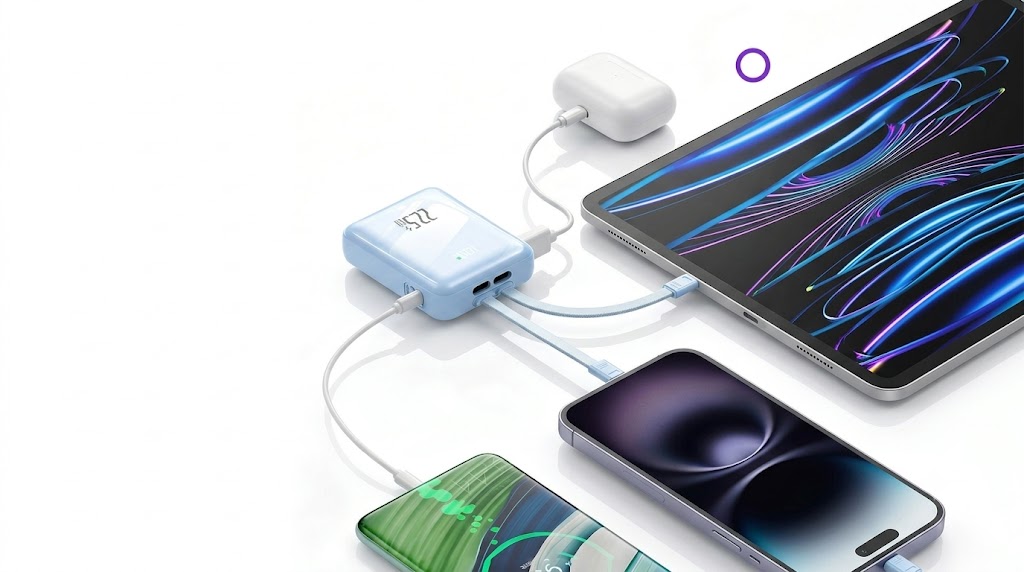
However, if you frequently tackle multi-day cross-country travel or working vacations, look for a heavy-duty 20,000mAh or 25,000mAh power reservoir. These high-capacity blocks deliver total energy independence across long flights, keeping your entire ecosystem running smoothly without breaking strict airline carry-on size limitations.
Conclusion: Future-Proof Your Mobile Charging Routine
Achieving true mobile efficiency requires picking charging accessories that streamline your daily life while keeping your device ecosystem completely powered up.
Stop untangling long, messy charging cords or searching through your bag for a missing connection wire. Upgrading your emergency gear to a professional dual built-in cable power bank gives you a streamlined, ultra-portable power source built for rapid daily deployment. We engineer every single battery cell and integrated hinge connection to deliver rugged durability and safe performance across all your travel adventures.
AiL technical product team to check out our premium portable chargers and pick the ideal power setup for your tech ecosystem.