
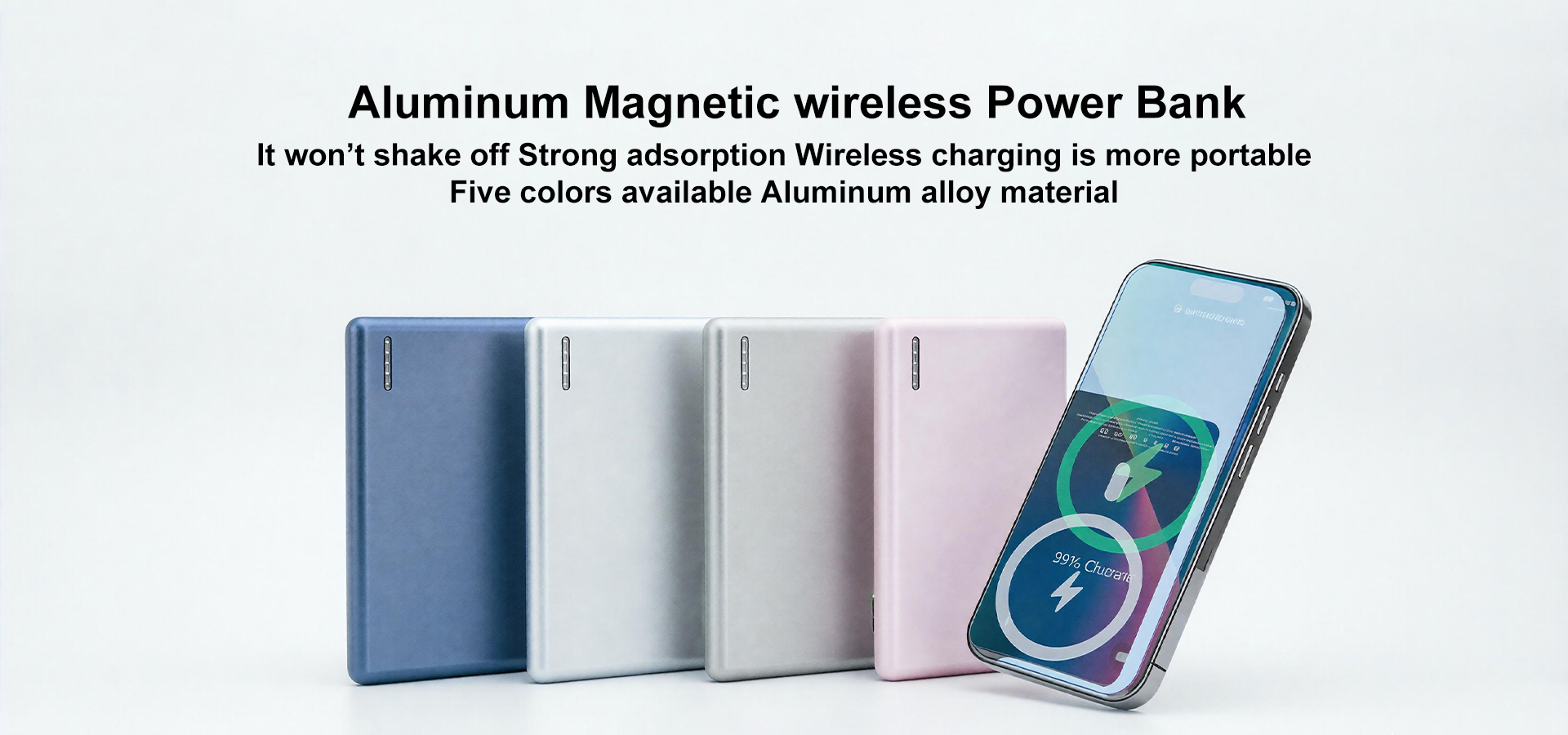
Consumer electronics distributors, mobile accessory buyers, and retail procurement managers regularly evaluate magnetic wireless power banks to fulfill growing demand for Qi2 and MagSafe accessories. Because electromagnetic induction inherent to wireless charging inherently generates thermal energy, battery health, user comfort, and device safety remain primary considerations for consumers. Consequently, retail customers frequently ask power accessory specialists a fundamental technical question: “Do magnetic power banks get dangerously hot during extended use, and will this operational heat degrade smartphone battery health over time?”
Using sub-standard magnetic chargers with poor heat dissipation creates noticeable performance bottlenecks, such as severe power throttling, reduced charging efficiency, and accelerated lithium-ion cell degradation. Conversely, advanced magnetic power accessories integrate premium aluminum housings alongside NTC temperature sensors to regulate operating temperatures. Understanding the role of a high-performance magnetic power bank’s aluminum heat dissipation architecture helps buyers select power accessories that deliver stable, high-speed wireless charging while preserving long-term battery health. This technical guide explains wireless charging thermodynamics, details smart thermal control mechanisms, compares structural housing materials, and provides procurement guidelines for power accessory buyers.
1. The Science of Wireless Charging Heat Generation
To understand why thermal management is necessary, engineers analyze energy conversion efficiency during electromagnetic induction.
Electromagnetic Induction Losses
Magnetic wireless power banks transfer energy across copper transmitter and receiver coils via an alternating magnetic field. During this inductive process, approximately 20% to 30% of energy is lost as heat due to coil resistance, eddy currents, and air-gap magnetic flux dispersion. Generating mild, ambient warmth during active wireless charging is a normal thermodynamic occurrence.
Thermal Impact on Lithium-Ion Battery Lifespan
While moderate operational heat is expected, sustained temperatures exceeding 45°C (113°F) accelerate chemical aging inside lithium-ion battery cells. Elevated heat increases internal resistance, degrades electrolyte stability, and reduces long-term battery capacity. Therefore, controlling peak operational surface temperatures is vital for maintaining device health.
2. Mechanical Heat Dissipation: Aluminum Alloy vs. Plastic Enclosures
Selecting structural housing materials directly dictates how efficiently a magnetic charger evacuates internal heat away from charging coils and internal battery cells.
Superior Thermal Conductivity of Aluminum
Aluminum alloy exhibits an exceptionally high thermal conductivity rating of approximately 200 W/m·K, compared to polycarbonate (PC) or ABS plastics, which average just 0.19 to 0.25 W/m·K. Aluminum enclosures act as passive heat sinks, drawing thermal energy away from internal copper coils and radiating it evenly into the surrounding air.
Real-World Thermal Management Implementations
- Ultrathin Aluminum Qi2 Chargers: Devices engineered with full aluminum alloy bodies leverage structural heat conduction to maintain steady power delivery without surface hot spots.
- High-Conductivity Qi2 Modules: Advanced magnetic chargers utilize aluminum-encased Qi2 modules and active thermal management (such as Anker’s ActiveShield™ temperature sensors) to continuously monitor internal components, maintaining operating temperatures around 104°F (40°C)—substantially cooler than the industry safety threshold of 118.4°F (48°C).
3. Active Protection Protocols: Smart NTC Sensors and OS Protection
Structural passive cooling is complemented by active microcontroller monitoring and smartphone operating system protections to safeguard battery health.
| Protection Stage | System Response | Safety Function |
|---|---|---|
| 1. Heat Generation | Wireless charging naturally generates heat during power transfer. | The system maintains normal operating temperatures under standard charging conditions. |
| 2. Temperature Monitoring | Built-in NTC temperature sensors continuously monitor internal temperatures. | Real-time monitoring detects temperature changes and supports safe charging. |
| 3. Intelligent Power Control | The MCU automatically adjusts charging power when temperatures approach predefined safety limits. | Dynamic power management helps reduce heat buildup and maintain stable performance. |
| 4. Device-Level Protection | Compatible operating systems, including iOS 17 and iOS 18, may temporarily pause charging when excessive device temperatures are detected. | This additional protection helps prevent overheating during charging. |
| 5. Automatic Charging Recovery | Charging resumes automatically after the device returns to a normal operating temperature. | The system restores charging without requiring manual intervention. |
NTC Microcontroller Temperature Sampling
Modern magnetic power banks incorporate Negative Temperature Coefficient (NTC) thermistors adjacent to the primary copper coil. Microcontrollers sample thermal data continuously (often millions of times per day), dynamically throttling output power or pausing power transfer if internal temperatures exceed safety margins.
iOS 80% Charge Limit Guardrail
Smartphones running modern operating systems (such as iOS 17/18) feature built-in software thermal protections. When the device detects elevated skin temperatures during wireless charging, it automatically pauses charging at the 80% threshold to protect battery chemistry. Once the device cools down, charging automatically resumes, preventing thermal degradation.
4. Comparative Analysis: Aluminum Alloy vs. Plastic Magnetic Power Banks
The matrix below contrasts structural aluminum power bank designs against conventional plastic enclosures across key operational parameters:
| Engineering Evaluation Metric | Aluminum Alloy Magnetic Power Bank | Standard Plastic (ABS/PC) Power Bank |
| Thermal Conductivity Index | ~200 W/m·K (Exceptional heat transfer) | ~0.2 W/m·K (Traps heat internally) |
| Heat Evacuation Efficiency | Rapid conduction across a full metallic surface | Slower radiation; creates localized hot spots |
| Sustained Charging Speed | High; minimal thermal throttling required | Moderate; frequent power drops to prevent overheating |
| Structural & Drop Durability | Exceptional rigidity; resistant to impact | Moderate; susceptible to cracking under stress |
| Enclosure Profile & Thickness | Ultra-thin profile due to structural strength | Thicker walls required for structural rigidity |
| Long-Term Battery Protection | High; preserves battery health via lower core temps | Moderate; higher internal heat accelerates cell aging |
5. Procurement and Quality Guidelines for Power Accessory Buyers
Importers, retail buyers, and brand managers can optimize product reliability and customer satisfaction by implementing three key procurement protocols:
- Prioritize Anodized Aluminum Alloy Housings: Specify power banks constructed with full aluminum or metal-frame chassis. Metal enclosures maximize heat dissipation surface area while providing a premium hand-feel and ultra-thin profile.
- Verify Qi2 Certification and NTC Thermal Controls: Ensure power accessories carry official Qi2 certification and feature integrated NTC thermal sensors. Certified Qi2 units incorporate precise magnetic alignment and strict thermal limits.
- Inspect Safety Certification Ratings: Require comprehensive testing documentation, including FCC, CE, RoHS, UN38.3, and IEC 62133 compliance, guaranteeing over-current, over-voltage, and thermal shutdown protections.
Technical Summary
Relying on effective magnetic power bank aluminum heat dissipation techniques resolves thermal management challenges inherent to wireless power transfer. By combining high-conductivity aluminum enclosures with NTC smart thermistors and smartphone software protections, advanced magnetic power banks ensure stable power transfer while safeguarding device battery health.
AiL manufactures high-precision magnetic power banks, Qi2 wireless chargers, and portable power solutions engineered to strict international safety and quality standards.